
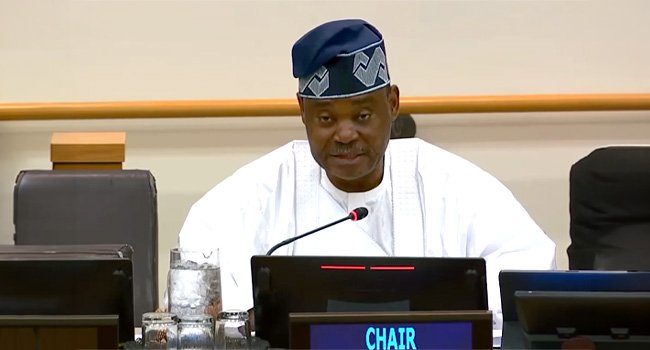

Nigeria has taken a prominent role in the United Nations’ administrative and governance processes, with its Permanent Representative to the UN, Ambassador Jimoh Ibrahim, presiding over elections into key subsidiary bodies of the General Assembly, according to ChannelsTv. The exercise took place under the Fifth Committee during the 81st Session of the UN General Assembly in New York, covering appointments to bodies responsible for international civil service matters, financial oversight, audit advisory functions and budget administration. The proceedings placed Nigeria at the centre of a significant institutional process within the UN system, with Ibrahim overseeing the voting and subsequent recommendations for appointments.
One of the major contests concerned the chairmanship of the International Civil Service Commission, where Mauritania’s candidate, C.D. Mohammed, secured 102 votes, defeating Zimbabwe’s candidate, who received 82. Mohammed obtained the required majority and was recommended to the General Assembly for a four-year term beginning in January 2027. Israel’s candidate, Shai Mazai, also secured 134 votes to emerge as the recommended representative of the Western European and Other States Group on the Independent Audit Advisory Committee for a three-year term. Other appointments were made through acclamation where there were no competing nominations. Ibrahim directed that ballot boxes be opened for inspection before voting commenced, a measure reported as part of the effort to ensure transparency in the process.
The Fifth Committee is responsible for the UN’s administrative and budgetary affairs, making its work central to how the organisation allocates resources, oversees expenditure and supports the implementation of its global mandates. Nigeria’s chairmanship of the committee for the 81st session, following Ibrahim’s election in June 2026, provides the country with a formal leadership role in deliberations affecting the institution’s financial and administrative priorities. The latest elections demonstrate the practical responsibilities attached to that position, including managing contested appointments, facilitating consensus and ensuring that recommendations are communicated to the General Assembly for final consideration.