
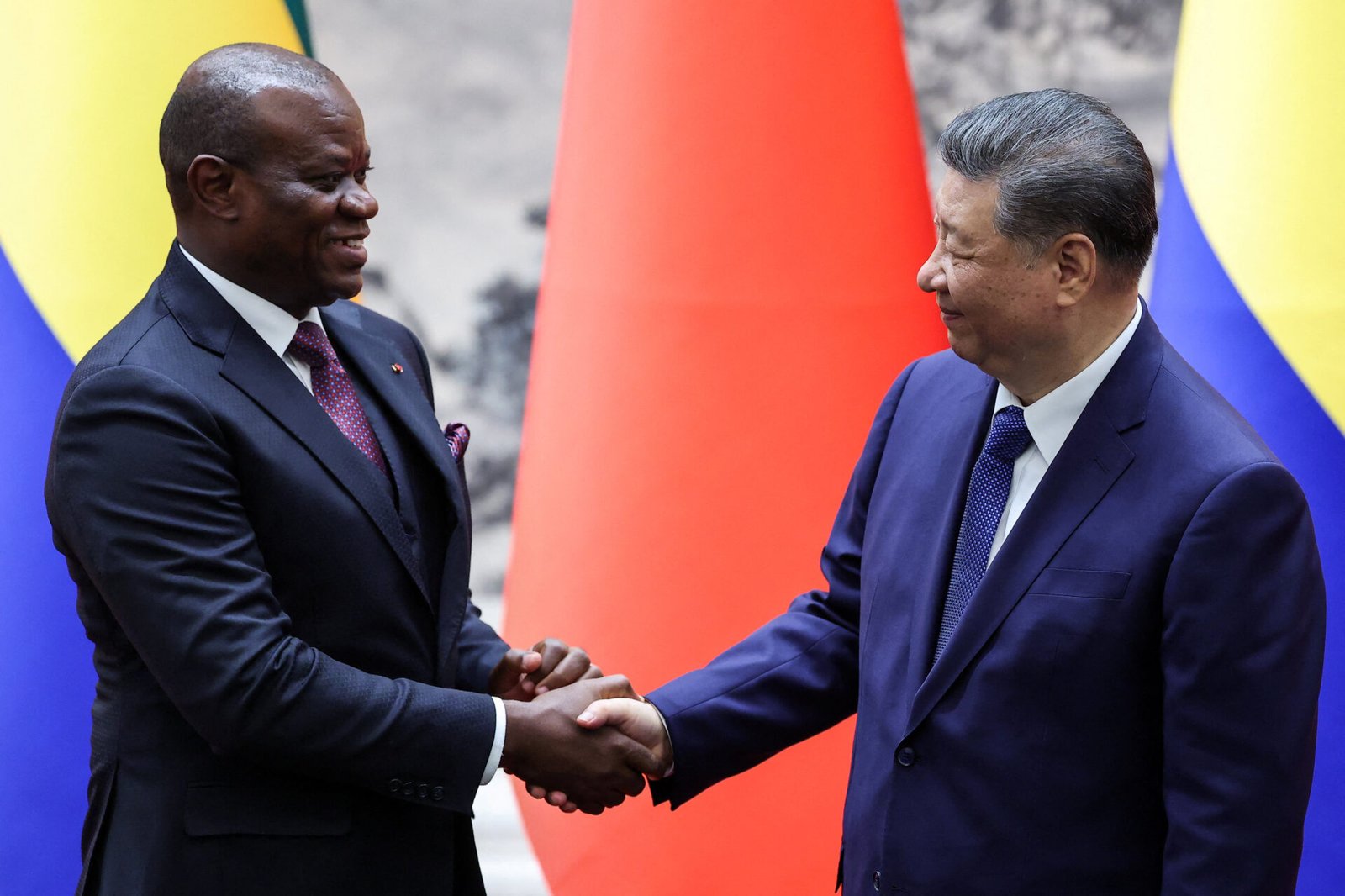

China and Gabon have elevated their bilateral relationship to a new strategic level, committing to deeper cooperation in mining, security, trade and industrial development following a state visit by Gabonese President Brice Clotaire Oligui Nguema to Beijing. The agreement was announced on November 6 after talks between Oligui Nguema and Chinese President Xi Jinping, with both leaders unveiling a framework described as a China-Gabon community with a shared future for the new era. The move builds on decades of diplomatic and economic relations and signals a renewed effort to align China’s investment capacity with Gabon’s national development priorities. According to CNBC Africa, the two governments will strengthen political and institutional exchanges while expanding cooperation across strategic sectors.
Mining emerged as a central pillar of the renewed partnership, reflecting Gabon’s significant deposits of manganese, gold and other mineral resources. China pledged to support Gabon in converting its natural resource wealth into drivers of industrial development, with both governments agreeing to deepen geological exploration, mining cooperation, industrial supply chains and local processing. Gabon’s presidency said six memorandums of understanding were signed during the visit, covering geological and mining cooperation, geoscience training, industrial chain development, a framework for shared economic development, construction of a multipurpose building for the Ministry of Foreign Affairs, and cooperation between the countries’ television networks. The agreements are intended to support Gabon’s National Growth and Development Plan for 2026 to 2030, including its ambition to capture greater domestic value from mineral production rather than relying predominantly on raw material exports.
The two countries also committed to expanding cooperation in peace and security, including exchanges between their armed forces, law enforcement institutions and security agencies. Additional areas identified include maritime security in the Gulf of Guinea, agriculture, digital technology, healthcare, education and vocational training. The agreements come as Beijing seeks to deepen its economic engagement with resource-rich African countries, while Gabon pursues industrialisation, economic diversification and stronger domestic capacity. For Libreville, the central challenge will be translating diplomatic commitments and memorandums into measurable investment, technology transfer, local employment and processing capacity. For China, the expanded relationship strengthens its engagement with a strategically positioned Central African economy and reinforces its broader commercial and diplomatic presence across the continent.