
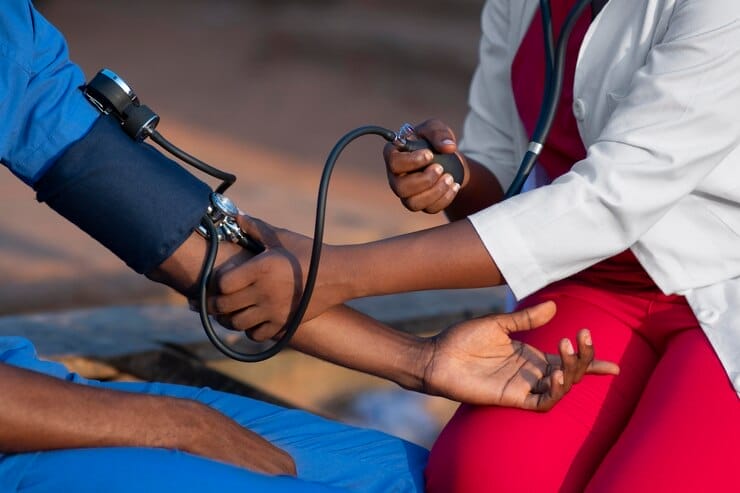

Kenya’s healthcare system is facing a mounting crisis that threatens to cripple both public and private medical services nationwide. Widespread job losses, donor funding withdrawals, and a government insurance overhaul beset by delays have created a perfect storm, leaving hundreds of thousands of Kenyans without access to reliable healthcare and the sector’s workers demanding urgent action.
According to a new report by the Rural and Urban Private Hospitals Association of Kenya (RUPHA), 82% of private and faith-based health facilities have scaled down operations due to increasing financial unsustainability. The core causes include delayed reimbursements by the government, ballooning statutory obligations, and restrictive regulatory frameworks. In response, health providers have undertaken sweeping cost-cutting measures, including staff reductions across all levels. The fallout has been staggering: 66% of nurses, 56% of clinical officers, and 41% of laboratory personnel have reportedly been laid off, with some facilities now operating with skeletal teams or temporary hires to stay afloat.
But the ripple effect goes beyond the loss of jobs. One of the most alarming consequences has been the suspension of healthcare services for essential public servants, including over 450,000 teachers and 150,000 police officers. This follows more than KSh1.2 billion in unpaid claims owed by Medical Administrators Kenya Limited (MAKL), the firm tasked with administering the civil service medical scheme. Hospitals, citing untenable arrears, have halted services to these insured groups, effectively stripping a vast segment of the population of their medical cover and placing additional strain on public health institutions.
The crisis has deepened with the recent decision by the United States Agency for International Development (USAID) to suspend foreign aid to health programs in Kenya. The move has led to mass retrenchments and the downsizing of key health programs, particularly HIV/AIDS treatment and prevention services that rely heavily on donor support. Thousands of healthcare workers previously funded under these programs now face uncertain futures, while the patients they served confront disruptions to life-saving treatment.
Compounding the problem is the Kenyan government’s transition from the National Hospital Insurance Fund (NHIF) to the newly established Social Health Authority (SHA), a reform aimed at expanding universal health coverage. However, the transition has been anything but smooth. Bureaucratic delays, implementation hiccups, and incomplete funding mechanisms have left patients confused and uncovered, further destabilizing an already fragile sector.
In a move that has sparked widespread concern, the Ministry of Health’s budget for the 2024-25 fiscal year was slashed by more than KSh11 billion. Health experts warn that these reductions, coming at a time of elevated pressure on hospitals and staff, could paralyze the sector altogether if not urgently reversed. The situation is particularly dire for patients with chronic illnesses, including those living with sickle cell disease, cancer, and diabetes, whose treatment continuity depends on consistent funding and access to care.
Health workers’ unions, professional associations, and civil society voices are now calling for a coordinated emergency response. Their demands include the immediate clearance of outstanding payments to health providers, reinstatement of donor-funded programs, recruitment of displaced health personnel, and the accelerated rollout of the Social Health Authority with full budgetary support.
“We won’t be dumped,” one Nairobi-based nurse said during a protest last week. “We stood by the country during the pandemic. Now we’re being abandoned.”
For now, Kenya’s health sector hangs in the balance, its workers demoralized, its institutions underfunded, and its citizens left increasingly vulnerable in the face of a preventable catastrophe. The government’s next steps could determine whether the system bends or ultimately breaks.