
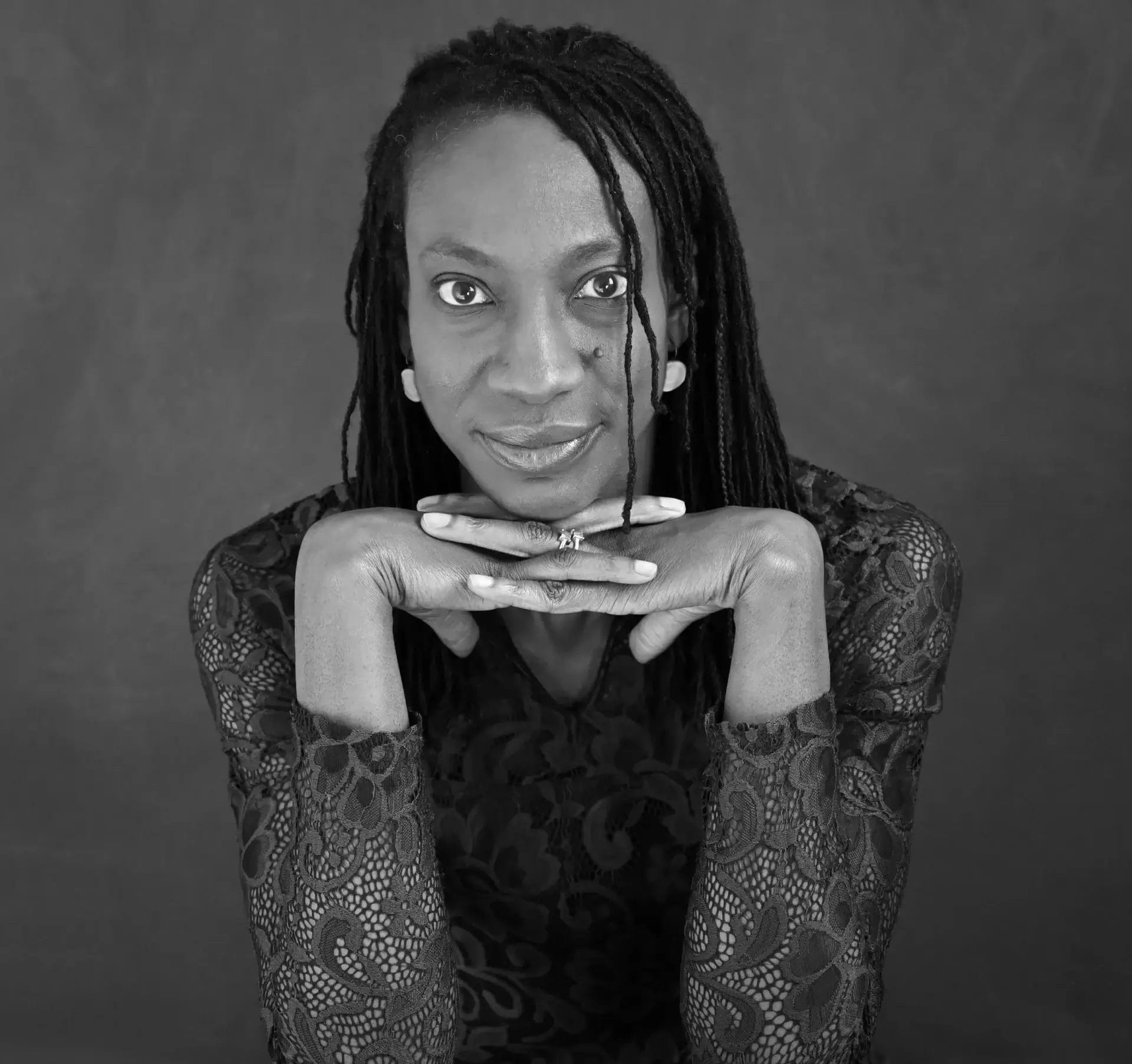

Yewande Omotoso writes with the precision of an architect and the tenderness of a healer. A storyteller deeply attuned to the fault lines of human connection, she maps emotional landscapes with the same care she once brought to physical structures. Whether exploring grief, ageing, race, or reconciliation, her novels offer carefully crafted spaces in which readers can confront the fractures of history and self with grace, humility, and unflinching honesty.
Born in Barbados, raised in Nigeria, and now based in South Africa, Omotoso is a writer shaped by borders but not confined by them. Her work transcends geography and genre, speaking to the quiet universality of pain and possibility.
Don’t Miss: Leslie Okoye Redefining Beauty Through Wellness, Education, and Empowerment
Building Fiction from Foundations of Design
Before she ever penned a novel, Omotoso was an architect, trained at the University of Cape Town, where she later earned an MFA in Creative Writing. That duality defines her writing: structurally sound, emotionally resonant, and sparingly elegant.
Her stories are not driven by spectacle. Instead, they inhabit the crevices of ordinary lives, where subtle tensions build, and silence often says more than dialogue. For Omotoso, writing is a form of design, a deliberate act of shaping space, character, and memory.
Bom Boy: The Loneliness of Inheritance
Her debut novel, Bom Boy (2011), announced a singular voice in African literature. It follows Lékè, a troubled young man in Cape Town grappling with abandonment, secrecy, and emotional isolation. Through fragmented narrative and psychological depth, Omotoso crafts a study in how loneliness can be inherited like property.
The novel won the South African Literary Award for First-Time Author and was shortlisted for the Etisalat Prize for Literature. But more than accolades, it signaled a literary ethos: one that privileged introspection over drama and emotional architecture over plot spectacle.
The Woman Next Door: Healing Across a Fence
In her second novel, The Woman Next Door (2016), Omotoso confronts the legacy of apartheid through the uneasy friendship of two elderly widows, one Black, one white, forced into reluctant proximity in a Cape Town suburb. Their shared bitterness eventually gives way to understanding, in a narrative both sharp and deeply humane.
The novel garnered international acclaim, longlisted for the Baileys Women’s Prize for Fiction and the International Dublin Literary Award. Critics praised its dry wit and emotional intelligence, while readers found its quiet reconciliation deeply moving, a call to empathy without moralising.
An Unusual Grief: The Afterlife of a Mother
Her most recent work, An Unusual Grief (2022), is perhaps her most personal. It follows a mother navigating the hidden life of her daughter after her suicide. As she uncovers pieces of the daughter she never truly knew, she begins to reassemble her own identity.
The novel was lauded for its emotional depth and minimalist style. It doesn’t dramatize grief; it excavates it, layer by layer, like an architectural restoration. Through this story, Omotoso allows readers to witness how absence reshapes space, memory, and motherhood.
Between Borders and Belonging
Omotoso’s life and literature straddle continents. She is a cultural polyglot, rooted in the Caribbean, nurtured in West Africa, and creatively matured in Southern Africa. This multiplicity informs her writing, not just in setting, but in spirit.
As former Vice President of PEN South Africa, she has advocated for free expression and literary inclusion. Her voice has also graced international festivals, panels, and residencies, where she consistently emphasizes literature’s power to humanize and unite across difference.
Her architectural eye gives her a unique lens on identity: people, like buildings, carry layers of history, renovated, reinforced, sometimes crumbling quietly inside.
Toward the Next Blueprint
Yewande Omotoso continues to evolve, working on new fiction that leans more autobiographical, and experimenting with form and voice. But her signature remains unchanged: restraint, depth, and an unsentimental compassion that lingers long after the final page.
In her world, fiction is not escape, it is blueprint. It is how we examine the cracks in our foundations, and how, brick by emotional brick, we begin again.
Omotoso doesn’t shout. She doesn’t need to. Her fiction speaks in the stillness, making space for tenderness, transformation, and the slow repair of what once seemed beyond healing.