
Pressdia Ad

Ghana Mineworkers Raise Alarm Over Outsourcing Policy Threatening Wages and Jobs

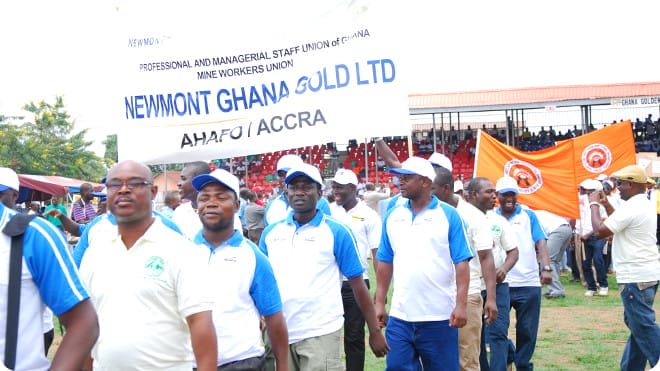
Ghana’s mineworkers’ union has warned that a new government policy requiring international mining companies to outsource key operations to local contractors could lead to significant wage cuts and job insecurity for workers. According to Reuters, the policy, part of efforts to boost local participation in the mining sector, mandates that surface mining be handled by fully Ghanaian-owned firms and underground operations by companies with at least 50% local ownership by December 2026.

Union president Abdul Moomin Gbana said the shift would likely reverse hard-won labour protections, noting that local contractors typically pay lower wages and offer weaker job security compared to multinational operators. The union, which represents about 14,000 workers, has threatened protests and strikes if the policy is not revised, arguing that workers could earn up to 50% less under contractor arrangements.

The government maintains that the policy is aimed at strengthening domestic mining capacity and retaining more economic value within Ghana, while regulators have pledged tighter oversight to prevent exploitation. However, tensions remain high as workers push back against what they see as a policy that prioritizes local ownership over labour welfare.

What This Means For Africa

This development highlights a growing trend across Africa where governments are pushing for “local content” policies to retain more value from natural resources. While the intention is economically strategic, the Ghana case exposes a key risk: if not properly regulated, localization can shift wealth without protecting workers.

For Africa, this is a balancing test between economic sovereignty and labour rights. If countries prioritize local ownership without enforcing strong wage and welfare standards, it could create a continent-wide pattern of lower-paying, less secure jobs in critical sectors like mining.

At the same time, if Ghana manages to refine the policy with proper oversight, fair pricing structures, and worker protections, it could become a model for how African nations can localize industries without sacrificing livelihoods.


Pressdia Ad

Subscribe to Newsletter

Get the latest in luxury, business, and elite trends—subscribe now!

Pressdia Ad

Subscribe

Latest Posts

Sandra Hüller Joins Avengers Doomsday in Secret Cameo Role

German actress Sandra Hüller, the Oscar-nominated star of Anatomy of a...

Crawl 2 Adds Sarah Niles and Ray Panthaki Ahead of July 2027 Release

Paramount Pictures has expanded the cast of Crawl 2, its upcoming...

Femi Otedola’s First HoldCo Posts $684 Million Pre-Tax Profit as Earnings Rise 61%

First HoldCo Plc, the parent company of FirstBank Nigeria and chaired...

Nigeria Wins Bid to Host 2028 ITTF Africa Championships in Lagos

Nigeria has secured the hosting rights for the 2028 International Table...

Zephans & Co: Africa’s No.1 Ready to Wear Women Brand

Zephans & Co brings together contemporary style and modern femininity through...

The Library Lagos: Where Fine Dining Meets Live Entertainment

The Library Lagos brings together contemporary fine dining, live performances and...

Fola David to Lead 1,000 Children in Guinness World Record Art Attempt in Lagos

Nigerian medical doctor and visual artist Fola David is preparing to...

Related Posts

Microsoft Nominates Irish billionaire John Collison to Board as Two Directors Step Down

Microsoft has nominated Irish billionaire John Collison, co-founder and...

Ibrahim Mahama’s E&P Pursues $740 Million Claim Against Gold Fields in Ghana

Ghanaian businessman Ibrahim Mahama’s mining company, Engineers & Planners...

Nigeria’s NEC Endorses 90-Day Action Plan to Tackle Cost of Living

Nigeria’s National Economic Council (NEC) has endorsed a 90-day...
Samuel Oluwamayomikun
Samuel Oluwamayomikun is the Editor in Chief and Lead Copywriter at Empire Magazine Africa, where he leads editorial direction and shapes compelling narratives across business, culture, leadership, and African excellence. With a sharp eye for storytelling and strategic communication, he oversees content development, brand voice, and high impact features that position individuals and organisations with clarity and influence. His work sits at the intersection of journalism, brand storytelling, and editorial strategy, ensuring every piece published aligns with Empire Magazine Africa’s standard of depth, credibility, and cultural relevance

LEAVE A REPLY

Please enter your comment!
Please enter your name here