

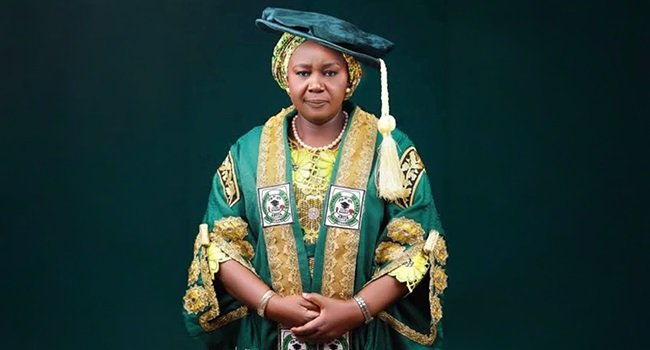

The University of Jos has appointed Professor Patricia Manko Lar as its 11th substantive Vice-Chancellor, making her the first woman to lead the institution since its establishment in 1971, as reported by Premium Times and Voice of Nigeria. The appointment was announced on November 12, 2026, by Senator Grace Folashade Bent, Pro-Chancellor and Chairman of the university’s Governing Council, during a special meeting of the 15th Governing Council. Lar will succeed Professor Tanko Ishaya, whose tenure concludes on November 30, and is expected to formally assume office on December 1. Her appointment marks a historic moment for the university and a significant development for female representation in the leadership of Nigeria’s higher education institutions.
A Professor of Medical Microbiology, Lar’s journey at the University of Jos spans nearly four decades. She joined the institution in 1987 as a Graduate Assistant and steadily progressed through its academic ranks, attaining professorial status in 2015. She earned her Bachelor’s degree in Microbiology from Ahmadu Bello University in 1986, followed by a Master’s degree in Medical Microbiology in 1989 and a doctorate in Medical Parasitology in 1998 from the University of Lagos. She also undertook postdoctoral training at the University of Maryland in the United States through the NIH-Fogarty Fellowship Programme. Her research interests include infectious diseases, particularly HIV/AIDS, malaria and antimicrobial resistance, and she has authored more than 40 scholarly publications.
Beyond teaching and research, Lar has held several administrative positions, including Head of the Department of Microbiology and Director of Linkages and Collaborations at UNIJOS. She also served as Secretary-General of the West African Research and Innovation Management Association and previously held the position of Acting Vice-Chancellor at Yakubu Gowon University, Abuja, formerly the University of Abuja. As she prepares to take the university’s highest administrative office, her leadership will come at a time when institutions across Nigeria face growing demands for stronger research capacity, improved infrastructure, student welfare and academic competitiveness. Her appointment not only breaks a longstanding leadership barrier at UNIJOS but also places her at the centre of the institution’s next chapter of academic and administrative development.