
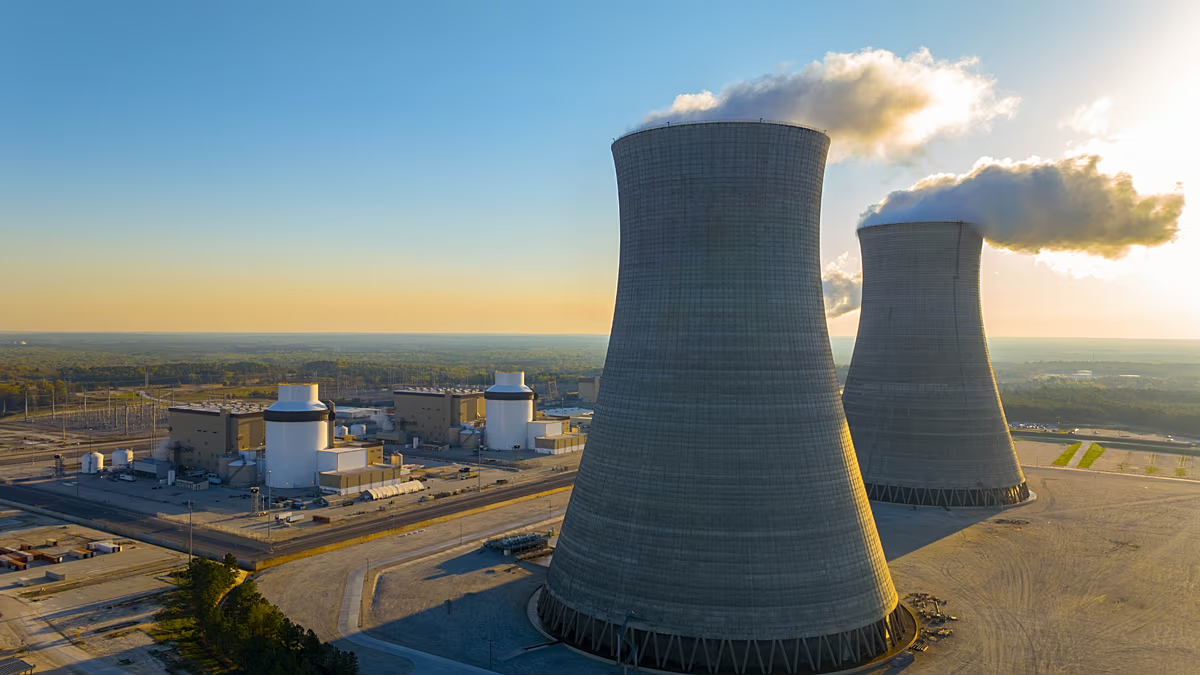

Poland is targeting the first quarter of 2027 to sign a final engineering, procurement and construction contract with a United States consortium for its flagship nuclear power plant, advancing one of Europe’s largest energy infrastructure projects. The agreement will involve Westinghouse Electric Company and engineering contractor Bechtel, which have been selected to deliver the facility at Lubiatowo-Kopalino in northern Poland. According to Reuters and Euronews, the state-owned project developer, Polskie Elektrownie Jądrowe (PEJ), confirmed on November 19 that it expects to conclude the agreement next year, after negotiations extended beyond the original end-of-2026 target. The project, estimated at approximately $50 billion, will comprise three Westinghouse AP1000 reactors with a combined generating capacity of 3,750 megawatts.
The latest development follows an agreement reached in September 2026 between PEJ and the Westinghouse-Bechtel consortium on the main commercial and legal terms of the construction contract. Detailed provisions and supporting documentation are still being negotiated, with the parties working towards finalising the remaining terms. PEJ has also signed a separate letter of intent with the consortium covering the procurement of long-lead components, including critical equipment for the reactors. The distinction is important: the procurement arrangement advances preparations but does not constitute the final construction contract. Poland intends to begin construction of the first reactor in 2028, with electricity generation expected to commence in 2036. The second and third units are scheduled to follow in 2037 and 2038 respectively. Once operational, the facility is expected to supply approximately 10 per cent of Poland’s electricity demand.
The investment forms a central part of Poland’s strategy to diversify its energy mix, reduce its dependence on coal and strengthen long-term energy security. Nuclear power is expected to complement the country’s expanding renewable energy capacity while providing a stable source of electricity for households and energy-intensive industries. The project also carries significant industrial implications, with Polish companies being integrated into the supply chain. Bechtel disclosed that contracts worth more than PLN1 billion, approximately $250 million, had already been awarded to Polish businesses, alongside workforce development initiatives and university partnerships. For the United States, the agreement deepens commercial and strategic cooperation with a European ally, while creating opportunities for its nuclear technology and engineering companies. However, financing, regulatory approvals, construction costs and the management of a complex multiyear delivery programme remain critical considerations. The eventual success of the project will depend on Poland’s ability to convert its nuclear ambitions into reliable generating capacity without allowing delays and cost escalation to undermine its economic objectives.