
Pressdia Ad

Fossils of New Giant Spinosaurus Species Discovered in Niger

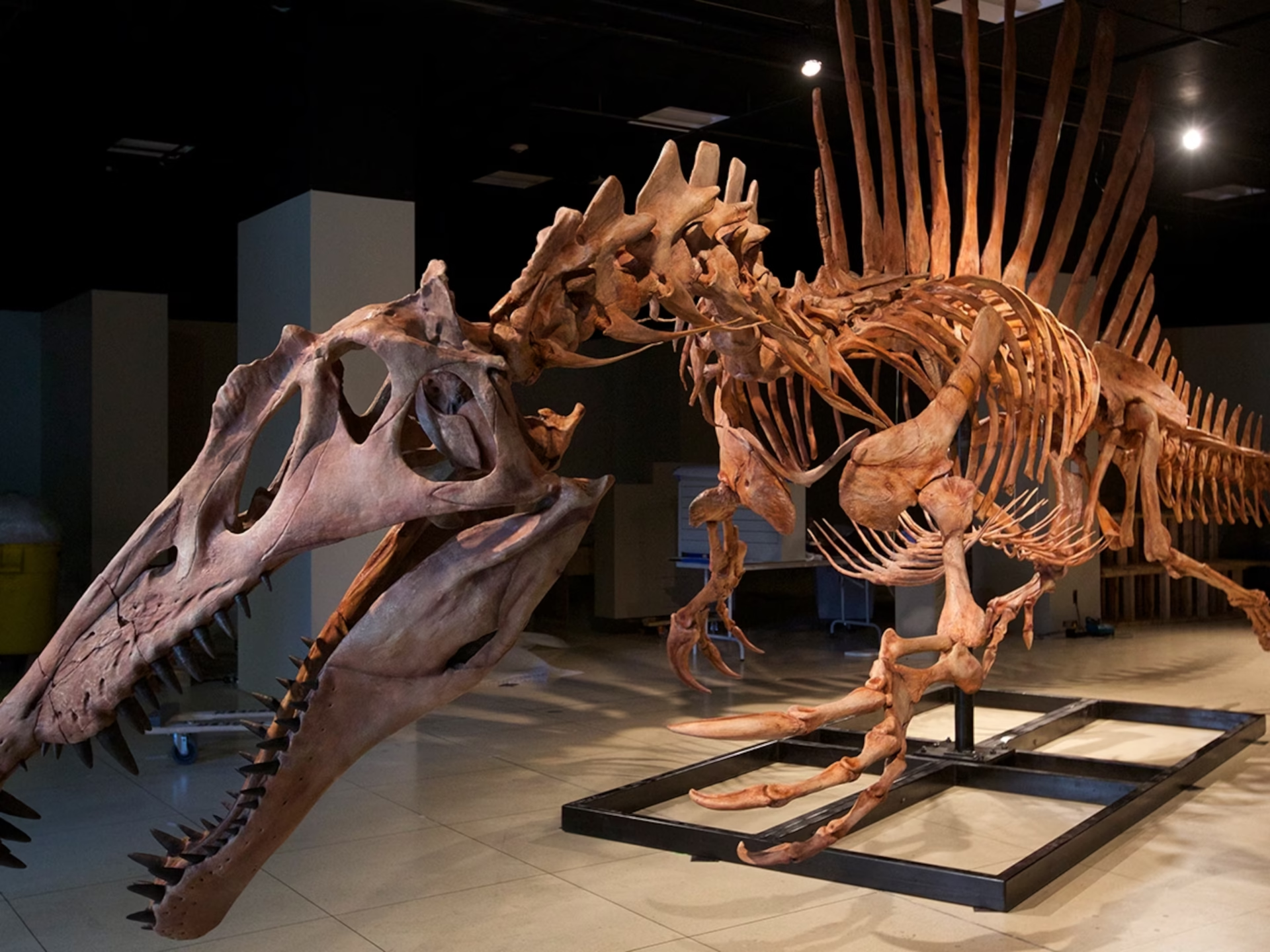
Paleontologists have uncovered fossils of a previously unknown species of Spinosaurus in the central Sahara Desert of Niger, revealing a massive predator that roamed Africa about 95 million years ago during the Cretaceous Period, according to Channel News Asia.

The new species, named Spinosaurus mirabilis, is among the largest carnivorous dinosaurs ever discovered, measuring roughly 12 metres (40 feet) in length and weighing between 5 and 7 tonnes. It is distinguished by a scimitar-shaped bony crest on its skull, likely used for display or mating, and a long, crocodile-like snout with interlocking teeth, adapted for hunting fish in shallow waters.

Fossils were recovered at the Jenguebi site during expeditions from 2019 to 2022, including parts of three skulls and other skeletal remains, confirming it as a distinct species rather than a variant of the previously known Spinosaurus aegyptiacus.

Researchers believe S. mirabilis inhabited forested inland environments and river systems, hunting large fish such as coelacanths. Its anatomy and inland habitat suggest it was adapted to shallow-water predation rather than being fully aquatic.

This discovery marks only the second formally recognized species of Spinosaurus and offers new insights into the diversity, evolution, and hunting behaviour of these prehistoric giants, reshaping scientific understanding of spinosaurids in Africa, as reported by CNBC Africa.


Pressdia Ad

Subscribe to Newsletter

Get the latest in luxury, business, and elite trends—subscribe now!

Pressdia Ad

Subscribe

Latest Posts

French Automakers Partner with Dangote to Reboot Nigeria’s Vehicle Production, Targeting 44,000 Units a Year

French automobile manufacturers are returning to Nigeria through strategic partnerships with...

DRC Launches First-Ever Gold Refinery With 500–600 kg Monthly Output

The Democratic Republic of Congo has inaugurated its first gold refinery,...

Resolute Mining Advances Third African Gold Project in Côte d’Ivoire with 2.2M-Ounce Target

Australia-based miner Resolute Mining has approved the final investment decision (FID)...

KCB Group Posts 11% Rise in 2025 Profit on Strong Interest Income

Kenya’s leading lender KCB Group reported an 11 percent increase in...

MSC Secures 45-Year Lagos Port Concession with Nigerdock

Global shipping giant Mediterranean Shipping Company (MSC) has secured a 45-year...

Funto Ibuoye Building Purpose Driven Spaces and Empowering Women Across Africa

Funto Ibuoye has carved a distinctive path at the intersection of...

South Africa’s Standard Bank Reports 11% Rise in Annual Earnings

Standard Bank Group, Africa’s largest lender by assets, reported an 11...

Understanding the 2026 Real Estate Market

Real estate has long been considered one of the most reliable...

Creating a Simple Sales Funnel That Converts Consistently

A sales funnel is essential for any business aiming to turn...

Related Posts

DRC Launches First-Ever Gold Refinery With 500–600 kg Monthly Output

The Democratic Republic of Congo has inaugurated its first...

Resolute Mining Advances Third African Gold Project in Côte d’Ivoire with 2.2M-Ounce Target

Australia-based miner Resolute Mining has approved the final investment...

KCB Group Posts 11% Rise in 2025 Profit on Strong Interest Income

Kenya’s leading lender KCB Group reported an 11 percent...
Samuel Oluwamayomikun
Samuel Oluwamayomikun is the Editor in Chief and Lead Copywriter at Empire Magazine Africa, where he leads editorial direction and shapes compelling narratives across business, culture, leadership, and African excellence. With a sharp eye for storytelling and strategic communication, he oversees content development, brand voice, and high impact features that position individuals and organisations with clarity and influence. His work sits at the intersection of journalism, brand storytelling, and editorial strategy, ensuring every piece published aligns with Empire Magazine Africa’s standard of depth, credibility, and cultural relevance

LEAVE A REPLY

Please enter your comment!
Please enter your name here