
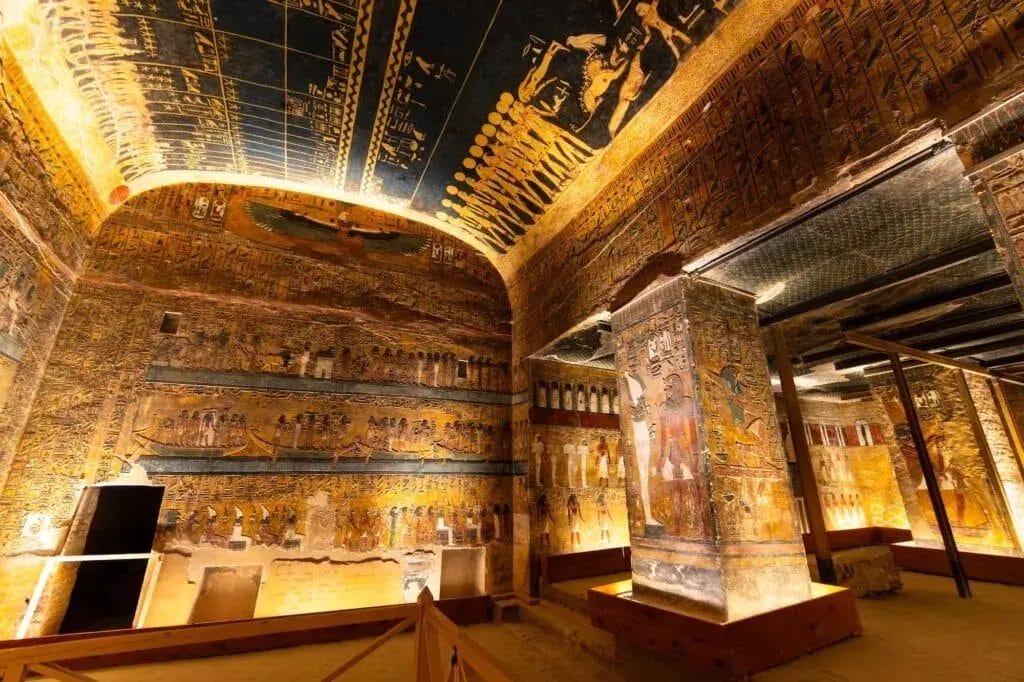

Egypt has unveiled a newly exhibited artefact linked to the tomb of Tutankhamun alongside two restored New Kingdom tombs in Luxor as the country intensifies efforts to strengthen cultural tourism and preserve its archaeological heritage. The announcement was made by Egypt’s Ministry of Tourism and Antiquities during a ceremony attended by archaeologists, tourism officials, and international visitors, according to Reuters and Egypt Today.
The newly displayed artefact, recovered from the famed Tutankhamun burial collection, is being showcased as part of wider preparations linked to Egypt’s expanding museum and heritage tourism strategy. Officials also reopened two restored tombs dating back more than 3,000 years in Luxor’s ancient necropolis, highlighting detailed wall paintings and burial inscriptions from the New Kingdom era.
Luxor remains one of the world’s most significant archaeological destinations, attracting millions of tourists interested in ancient Egyptian civilisation. Authorities say restoration projects are intended to preserve fragile historical sites while expanding tourism offerings ahead of the anticipated full opening of the Grand Egyptian Museum near Cairo.
Analysts note that Egypt has increasingly relied on cultural tourism as a key source of foreign currency earnings and economic recovery. The renewed focus on archaeological exhibitions and site restoration is expected to strengthen the country’s position as one of the world’s leading heritage tourism destinations while supporting jobs and investment in the tourism sector.