
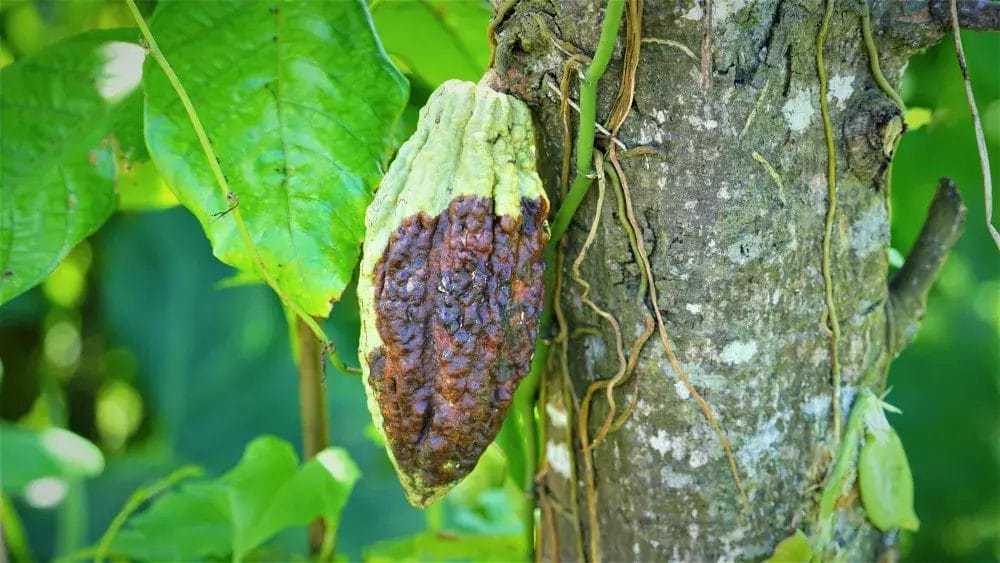

Cocoa farmers in Cameroon’s southwest region are grappling with severe losses as black pod disease spreads rapidly across plantations, threatening the livelihoods of thousands and raising concerns for global supply. Farmers’ associations in Mamfe and Kumba confirmed on Thursday that widespread infections have wiped out large portions of harvests, with some farmers losing more than half of their expected yield.
In remarks published by Cameroon Tribune, local cooperative leader Bernard Agbor described the outbreak as “the worst in years,” noting that farmers lack access to adequate fungicides and support systems. “We are watching our pods rot before they can be harvested,” he said, warning that the crisis could push many smallholders deeper into poverty.
Cameroon is the world’s fifth-largest cocoa producer, and the southwest remains its most productive growing region. Market analysts cited by Reuters indicated that the outbreak could weigh on the country’s output forecasts for the 2024/25 season, at a time when global demand remains strong and prices on the Intercontinental Exchange (ICE) are trading near record highs.
The Ministry of Agriculture has acknowledged the situation, with officials telling Bloomberg that emergency measures are being prepared to distribute fungicides and train farmers in disease management. However, farmer groups argue that delays in response could cause irreversible damage to both production and exports.
Experts note that Cameroon’s vulnerability to black pod disease underscores wider challenges in Africa’s cocoa sector, where climate change, poor infrastructure, and limited financing are leaving producers increasingly exposed to crop diseases and pests.