
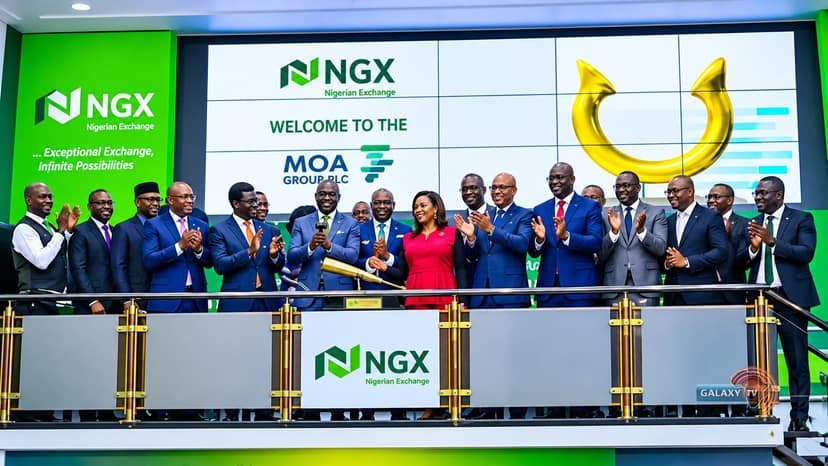

Nigerian Exchange Group Plc (NGX Group) has acquired a 10% equity stake in the Nairobi Securities Exchange (NSE), extending its investment presence into Kenya and strengthening financial connections between West and East Africa. The acquisition marks another step in the Nigerian financial market operator’s continental expansion following its strategic investment in the Ethiopian Securities Exchange in 2024.
The transaction, announced on November 16, 2026, positions Nigerian Exchange Group to participate in the development of Kenya’s capital market while diversifying its investment portfolio beyond Nigeria. According to Reuters, the financial value of the acquisition was not disclosed.
The development comes as African capital market integration gains momentum, with securities exchanges seeking to reduce barriers that restrict the movement of investment capital between countries. Beyond its commercial significance for NGX Group, the acquisition raises important considerations about how stronger institutional relationships could improve access to financing for African businesses.
Nigerian Exchange Group Expands Its Investment Strategy Across East Africa
The acquisition of a stake in the Nairobi Securities Exchange represents a continuation of NGX Group’s strategy to establish a presence in financial markets outside Nigeria.
In April 2024, the Group announced a strategic investment in the Ethiopian Securities Exchange, joining institutional investors supporting the development of Ethiopia’s securities market.
Unlike Ethiopia, where the investment supported the establishment of a new exchange, Kenya offers NGX Group exposure to an established financial market with decades of operating experience.
These investments provide the Nigerian Group with opportunities to participate in different stages of capital market development across East Africa.
Exchange operators occupy a distinctive position within financial systems. Their businesses can generate income through securities listings, trading services, market information and other financial infrastructure activities.
Investing in exchanges across different economies could therefore help NGX Group diversify its sources of investment returns and reduce its exposure to conditions in a single national market.
However, geographical diversification does not eliminate financial risk. Exchange operators remain sensitive to economic conditions, investor participation, regulatory changes and fluctuations in trading activity.
The commercial contribution of the Kenyan investment will depend on the Nairobi exchange’s financial performance and the terms of the acquisition.
Why the Nairobi Securities Exchange Matters to African Investors
Established in 1954, the Nairobi Securities Exchange has developed into an important institution within East Africa’s financial system, providing businesses with access to public capital and investors with opportunities to participate in the performance of listed companies.
The exchange provides access to equities, fixed-income securities, derivatives and other investment products. Its role extends beyond Kenya because the country’s financial institutions and businesses maintain commercial relationships across East Africa.
One prominent company listed on the exchange is Safaricom, the telecommunications business behind M-Pesa, a mobile money platform that has contributed to Kenya’s international reputation for financial technology innovation.
The presence of businesses such as Safaricom demonstrates how securities exchanges can provide investors with exposure to industries undergoing technological and commercial transformation.
The NSE’s own shares are also scheduled for inclusion in the MSCI Frontier Markets Small Cap Index, according to Reuters.
Inclusion in an international investment index can increase a company’s visibility among investors who monitor or use such benchmarks when constructing portfolios.
However, it does not guarantee additional investment inflows or an increase in share prices.
NGX Group’s acquisition provides it with an ownership interest in the exchange operator itself, creating exposure to the institution’s commercial performance without automatically granting direct ownership of the businesses listed on its platform.
African Capital Market Integration Moves Beyond Institutional Partnerships
Africa’s financial markets remain divided by national borders, different currencies and varying regulatory requirements.
Although investors can access international securities through certain financial intermediaries, investing across African markets can involve additional administrative procedures and transaction costs.
These barriers can restrict opportunities for businesses seeking funding beyond their domestic investor base.
The African Exchanges Linkage Project (AELP), established through collaboration between the African Securities Exchanges Association and the African Development Bank, seeks to address some of these challenges.
Its initial phase connected seven exchanges representing more than 90% of African stock market capitalisation, according to the project’s official documentation.
Participating markets included Nigeria, Kenya, South Africa, Egypt, Morocco, Mauritius and the regional exchange serving eight West African countries.
The initiative uses an electronic order-routing system that allows participating stockbrokers to transmit securities orders to brokers operating in other connected markets.
This infrastructure provides a practical foundation for cross-border securities trading without requiring the participating exchanges to merge.
The investment by NGX Group introduces an additional institutional relationship alongside existing trading infrastructure.
An ownership stake could create incentives for sustained cooperation, knowledge exchange and the development of complementary financial services.
Nevertheless, the acquisition does not automatically establish new trading arrangements between Nigerian and Kenyan investors. Any additional services would need to comply with the applicable regulatory and operational requirements.
Don’t Miss This:
Ogunsuyi Kehinde David Speaks on Crypto Security, Moderates Digital Identity Panel at Africa Blockchain Festival 2026 in Nairobi
Temi Popoola and Umaru Kwairanga Advance NGX Group’s Continental Expansion
The acquisition comes under the leadership of Temi Popoola, Group Managing Director and Chief Executive Officer of Nigerian Exchange Group, and Umaru Kwairanga, the Group’s Chairman.
Their strategy emphasises regional participation, diversification and the creation of long-term shareholder value through investments in financial market infrastructure.
Popoola identified Kenya’s importance within East Africa’s financial system and explained that the investment would broaden NGX Group’s potential sources of returns beyond Nigeria.
Kwairanga described the development of integrated African financial markets as moving “from aspiration to architecture” in the Group’s official announcement.
The distinction is significant because discussions about financial integration have historically focused on cooperation agreements, regulatory engagement and shared development objectives.
Direct equity investment introduces a commercial relationship in which one institution has committed capital to the future performance of another.
This could encourage longer-term institutional cooperation, although the extent of NGX Group’s influence over the Nairobi exchange will depend on its shareholder rights and governance arrangements.
A 10% stake represents minority ownership and does not establish that NGX Group controls the Kenyan exchange.
The announcement did not disclose new board appointments, management changes or operational restructuring arising from the transaction.
Cross-Border Investment Could Expand Financing Options for African Businesses
Access to long-term financing remains an important issue for African businesses seeking to expand production, enter new markets or invest in infrastructure.
Companies that rely predominantly on bank financing may face limitations relating to interest rates, collateral requirements and repayment periods.
Capital markets provide alternative financing mechanisms through which qualifying businesses can issue shares or debt securities to investors.
A more connected continental financial system could allow companies to reach a broader pool of potential investors without depending exclusively on capital available within their home countries.
A Nigerian manufacturing business pursuing expansion into East Africa, for example, could potentially benefit from financial arrangements that improve its visibility among regional institutional investors.
Similarly, Kenyan companies pursuing West African expansion could benefit from stronger connections with financial institutions and investment markets operating in Nigeria.
These possibilities extend to pension funds, asset managers and other institutional investors seeking opportunities to diversify their portfolios.
However, broader market access requires more than cooperation between exchange operators.
Cross-border investment depends on effective currency conversion arrangements, reliable securities settlement, investor protection and compatible regulatory processes.
Under the African Exchanges Linkage Project, trading and settlement remain subject to the rules of the market where the relevant security is listed.
This demonstrates that African capital market integration must accommodate national regulatory systems while reducing unnecessary obstacles to investment.
The NGX Group acquisition could support that process institutionally, but broader financing opportunities will depend on the practical arrangements developed over time.
What This Means For Africa
The acquisition of a minority stake in the Nairobi Securities Exchange by Nigerian Exchange Group highlights an important dimension of Africa’s economic integration: the ability of African institutions to invest in the infrastructure that supports continental capital flows.
Much of the discussion surrounding African economic integration has focused on the movement of goods and services under the African Continental Free Trade Area.
However, businesses also need access to capital to finance regional expansion, develop new products and increase their production capacity.
Developing stronger connections between securities exchanges could complement continental trade integration by improving the financial infrastructure available to businesses and investors.
The opportunity extends beyond attracting international investors into African markets. It includes creating conditions that allow African savings and institutional capital to participate more extensively in African businesses.
Pension funds, investment managers and other financial institutions could benefit from a wider selection of investment opportunities if regulatory and operational barriers are addressed.
Domestic businesses could also gain access to a more diversified investor base, reducing their dependence on a limited range of financing sources.
There are important challenges.
Currency volatility, differences in market liquidity, regulatory requirements and the availability of reliable company information can complicate cross-border investment.
Closer integration must therefore be accompanied by effective supervision, transparent financial disclosures and strong investor protection.
NGX Group’s investments in Ethiopia and Kenya demonstrate how African financial institutions are participating directly in the development of markets outside their home countries.
The long-term significance of the latest acquisition will depend on the practical outcomes of that participation.
Increased cross-border trading, wider financing opportunities and stronger institutional cooperation would provide measurable evidence of progress.
Ultimately, African capital market integration will become economically meaningful when stronger relationships between financial institutions translate into better access to investment capital for businesses and broader participation opportunities for investors across the continent.
Don’t Miss This: