
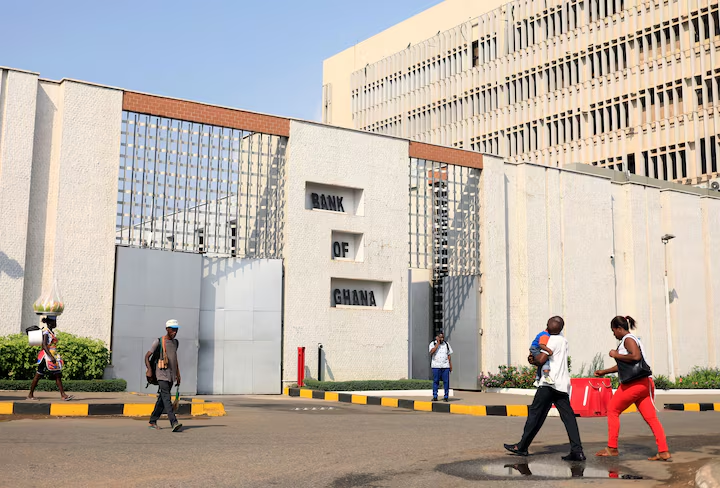

Ghana’s central bank has reduced its key policy rate more aggressively than anticipated, cutting it by 250 basis points to 27.5% as it moves to stimulate economic growth while inflation cools. The decision was announced on Monday following the Monetary Policy Committee (MPC) meeting, with details published in the Bank of Ghana’s policy statement reviewed by Reuters.
The latest cut marks the second consecutive reduction this year, after inflation slowed to 21.3% in August from 23.6% in July, its lowest level in nearly two years. Governor Ernest Addison stated during a press briefing in Accra that “with inflation firmly on a downward path and growth showing signs of weakness, the committee judged that a more decisive easing was warranted.”
Analysts at Bloomberg noted that most economists had expected a 150-basis-point reduction, making the larger cut a positive surprise for markets. The move reflects increasing confidence that Ghana’s fiscal and monetary reforms under the International Monetary Fund’s $3 billion rescue program are stabilizing the economy.
Ghana, once one of Africa’s fastest-growing economies, was hit hard by a debt crisis and soaring inflation in 2022. While the cedi has remained under pressure, the central bank emphasized that foreign reserves are adequate to support currency stability. “Our priority is to balance inflation control with supporting private sector credit growth,” Addison told journalists.
Market watchers believe the decision could spur renewed investment activity, though risks remain tied to fiscal discipline and global commodity price swings, particularly cocoa and gold, which are Ghana’s major exports.