
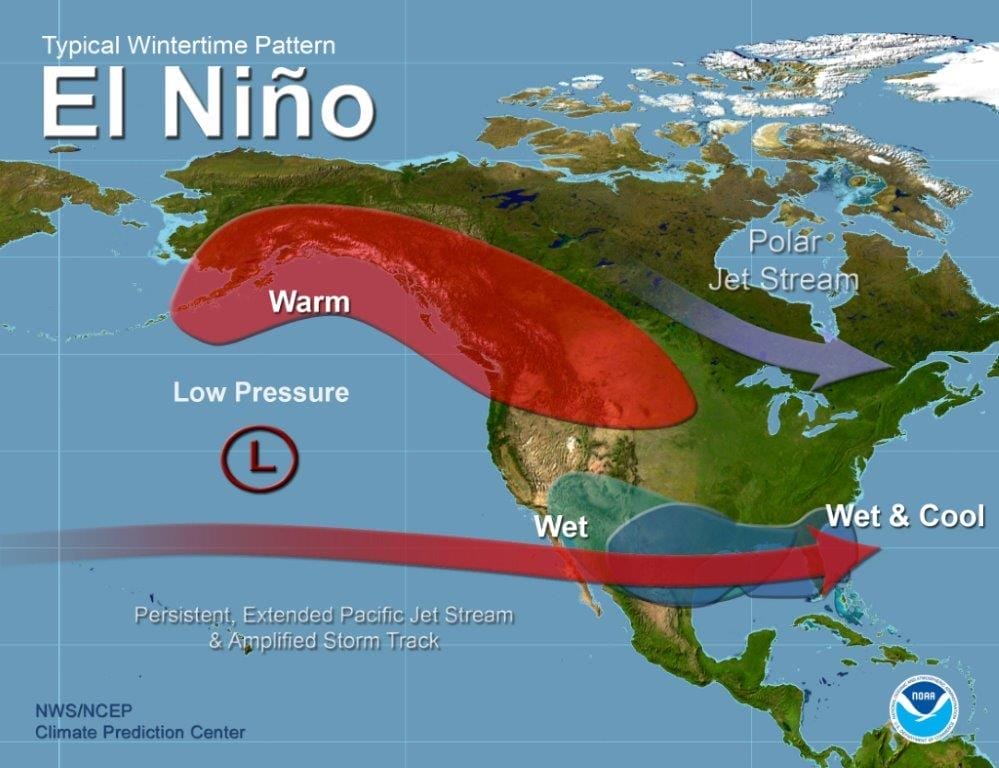

The United Nations’ weather agency, the World Meteorological Organization, has warned that El Niño conditions could develop as early as May 2026, marking a potential shift in global climate patterns after a period of neutral conditions, Reuters reported.
Scientists say rising sea surface temperatures in the equatorial Pacific Ocean are a key signal that the phenomenon is forming, with climate models now strongly aligned on its likely onset between May and July. El Niño events typically last between nine and twelve months and occur every two to seven years, influencing weather systems worldwide.
The impact is global and uneven. The event could bring heavier rainfall to parts of South America, the southern United States, and the Horn of Africa, while increasing the risk of drought in regions such as Australia, Indonesia, and parts of Asia, according to The Times of India. It also tends to push global temperatures higher, compounding the effects of human-driven climate change.
Forecasters are also watching for the possibility of a stronger-than-usual event. Some projections suggest the 2026 cycle could intensify later in the year, raising the likelihood of extreme weather events such as floods, heatwaves, and agricultural disruptions across multiple continents, The Guardian noted.
While early forecasts carry some uncertainty, especially during the spring prediction window, experts say confidence will improve in the coming months. For governments and industries, the warning is clear: prepare early, because El Niño’s ripple effects can stretch from food supply and water resources to energy demand and global economic stability.