
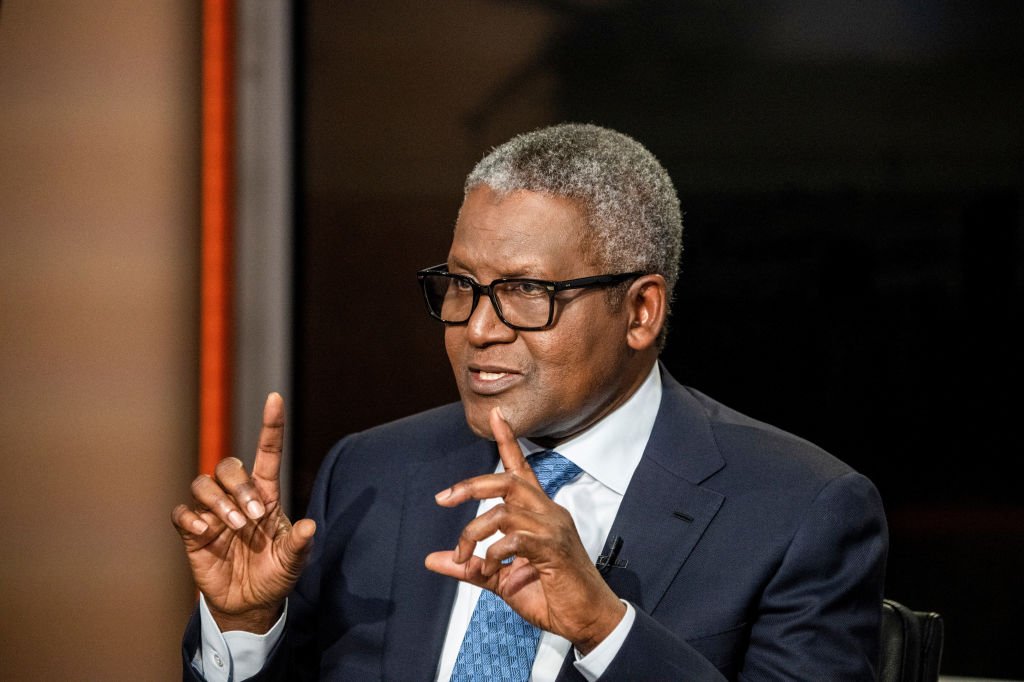

Aliko Dangote is in discussions with Nigeria’s Securities and Exchange Commission (SEC) to sell additional shares in Dangote Petroleum Refinery and Petrochemicals from his personal holdings, as the company seeks to accommodate institutional investors whose demand exceeded the shares available in its landmark initial public offering. According to Bloomberg, people familiar with the discussions said the proposed secondary sale could provide an additional route for investors to secure allocations after the offer attracted applications worth approximately ₦5.85 trillion, equivalent to $4.3 billion. The IPO, which closed on 27 October after six weeks, was initially designed to raise between $1.6 billion and $2.1 billion. Almost four million unique subscriptions reportedly came from investors across 120 countries, highlighting the international appetite for exposure to Africa’s downstream energy sector.
The proposed transaction comes as the refinery’s IPO is being expanded by up to 30 per cent, potentially increasing the offer to approximately $2.1 billion, subject to regulatory approval. Reuters previously reported that the company planned to increase the number of shares available from 4.1 billion to as many as 5.33 billion, including the overallotment option. Dangote currently holds approximately 87.3 per cent of the refinery, with his ownership expected to fall to about 84.4 per cent after the base offer or 83.6 per cent if the full overallotment option is exercised. A further sale from his personal stake would reduce his holding beyond those levels. Among the institutional investors seeking substantial allocations is South Africa’s Public Investment Corporation, which reportedly requested approximately $500 million worth of shares. The SEC has postponed publication of the final allotment list while it processes the transaction, although approval of the proposed secondary sale has not been publicly confirmed.
For Nigeria’s capital market, the development represents a significant test of its capacity to absorb large-scale corporate listings and attract international institutional capital. A secondary sale would allow Dangote to release more shares into the market without requiring the refinery itself to issue an equivalent volume of new equity, meaning proceeds from those shares would go to the selling shareholder rather than directly to the company. The broader significance lies in the investor demand surrounding one of Africa’s largest industrial projects, as the refinery’s public listing creates an opportunity for domestic and international investors to participate in the country’s energy infrastructure. However, the eventual impact will depend on regulatory approval, the final allocation structure and the volume of additional shares made available. How the SEC manages the process will also shape investor confidence in Nigeria’s ability to execute major public offerings transparently and efficiently.