
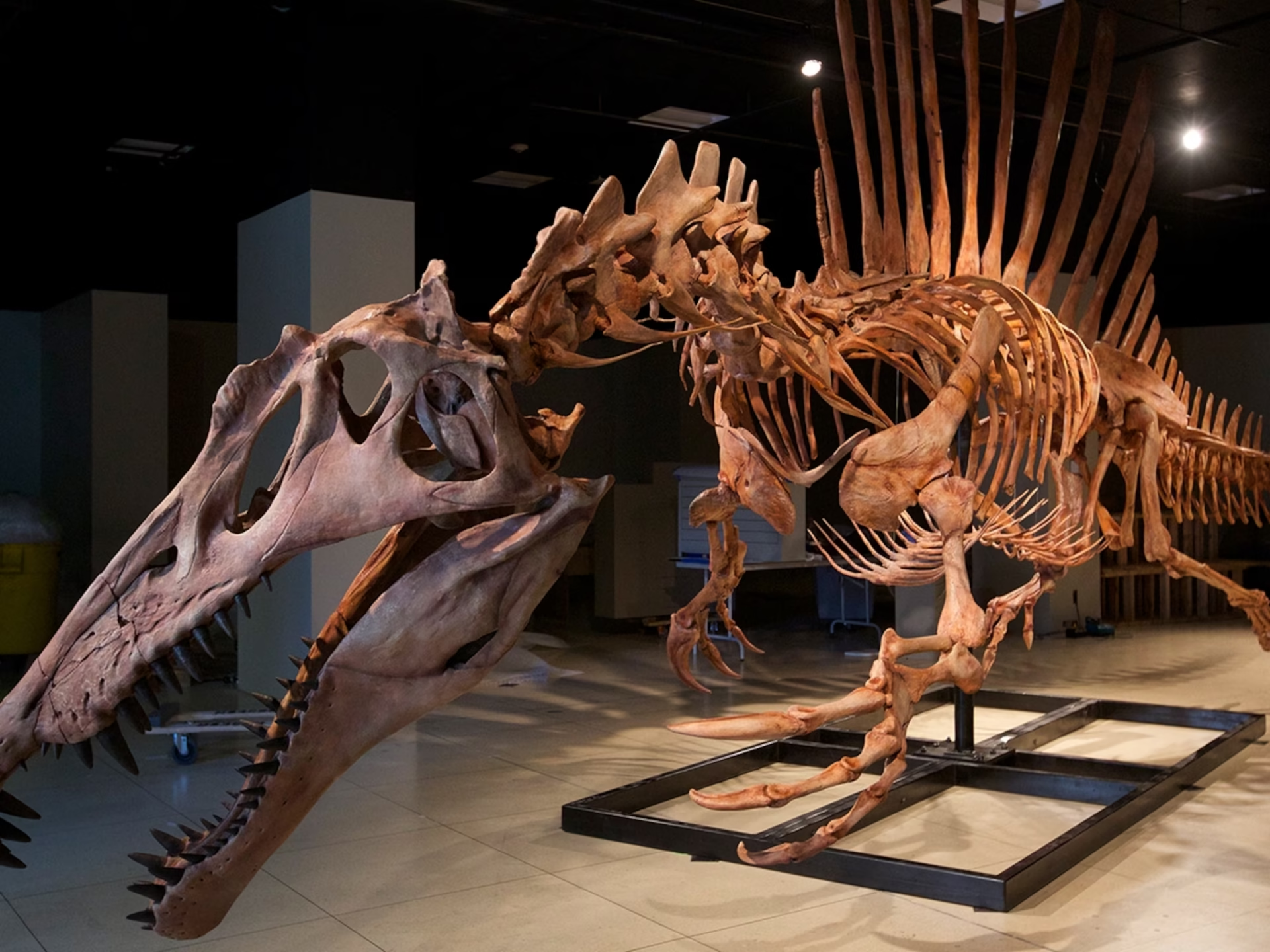

Paleontologists have uncovered fossils of a previously unknown species of Spinosaurus in the central Sahara Desert of Niger, revealing a massive predator that roamed Africa about 95 million years ago during the Cretaceous Period, according to Channel News Asia.
The new species, named Spinosaurus mirabilis, is among the largest carnivorous dinosaurs ever discovered, measuring roughly 12 metres (40 feet) in length and weighing between 5 and 7 tonnes. It is distinguished by a scimitar-shaped bony crest on its skull, likely used for display or mating, and a long, crocodile-like snout with interlocking teeth, adapted for hunting fish in shallow waters.
Fossils were recovered at the Jenguebi site during expeditions from 2019 to 2022, including parts of three skulls and other skeletal remains, confirming it as a distinct species rather than a variant of the previously known Spinosaurus aegyptiacus.
Researchers believe S. mirabilis inhabited forested inland environments and river systems, hunting large fish such as coelacanths. Its anatomy and inland habitat suggest it was adapted to shallow-water predation rather than being fully aquatic.
This discovery marks only the second formally recognized species of Spinosaurus and offers new insights into the diversity, evolution, and hunting behaviour of these prehistoric giants, reshaping scientific understanding of spinosaurids in Africa, as reported by CNBC Africa.