
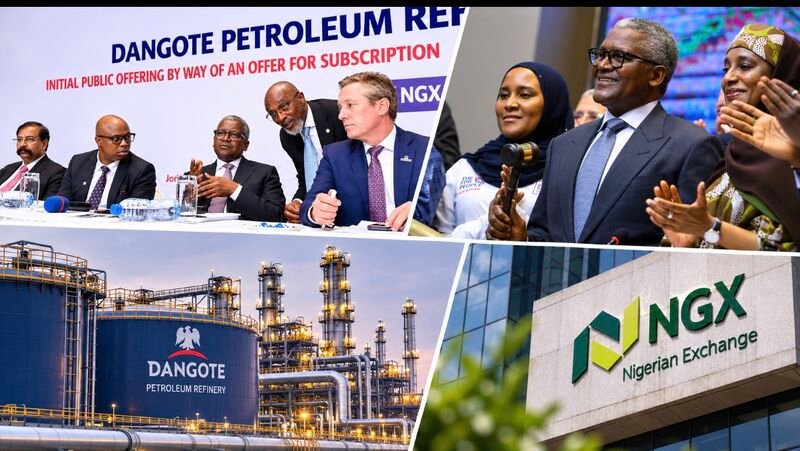

Aliko Dangote’s $20 billion petroleum refinery is set to commence trading on the Nigerian Exchange (NGX) on December 1, 2026, approximately one week ahead of its previously anticipated listing date, marking the culmination of Africa’s largest initial public offering. According to Bloomberg, people familiar with the transaction indicated that the shares are expected to begin trading on Tuesday following regulatory approval of the allocation process. Nigeria’s Securities and Exchange Commission approved the refinery’s share allotment plan on November 23, clearing a major regulatory hurdle ahead of the market debut. Although the NGX and the refinery have not yet formally confirmed December 1 as the first trading day, the reported date brings the company closer to completing a landmark transaction for Nigeria’s capital market.
The public offering attracted subscriptions worth approximately ₦5.85 trillion, equivalent to $4.3 billion, against an original offer of 4.1 billion shares priced at ₦525 each. The approved allotment schedule provides for the distribution of approximately 5.196 billion shares among 3,779,362 investors, representing an expansion of about 26.7 per cent over the initial offer. This takes the total value of the allocation to approximately ₦2.73 trillion, or $2 billion. According to BusinessDay, applicants who requested between 10 shares and 10 million shares are set to receive their full applications, while reductions affect just 41 of the largest investors. At the offer price, the refinery carries an implied valuation of approximately ₦65.2 trillion, positioning it among the most valuable companies on the African continent. Dangote is expected to retain approximately 84 per cent ownership following the transaction.
The listing represents a significant milestone for Nigeria’s capital market, potentially broadening retail participation while giving domestic and international investors direct exposure to one of Africa’s largest industrial investments. The refinery, which has an installed processing capacity of 700,000 barrels of crude oil daily, is pursuing an expansion programme aimed at doubling capacity to 1.4 million barrels per day by 2029. Proceeds from the equity offering are expected to support part of this expansion, alongside the company’s wider financing requirements. For the Nigerian Exchange, the arrival of a company of this scale could substantially influence market capitalisation, trading activity and the composition of major listed equities. However, the distinction between the ₦525 offer price and the eventual market trading price will be important for investors, as the share price after listing will be determined by market demand and performance expectations. The refinery’s debut will therefore mark not only the conclusion of a historic share sale but also the beginning of public market scrutiny of its earnings, expansion strategy and long-term commercial performance.