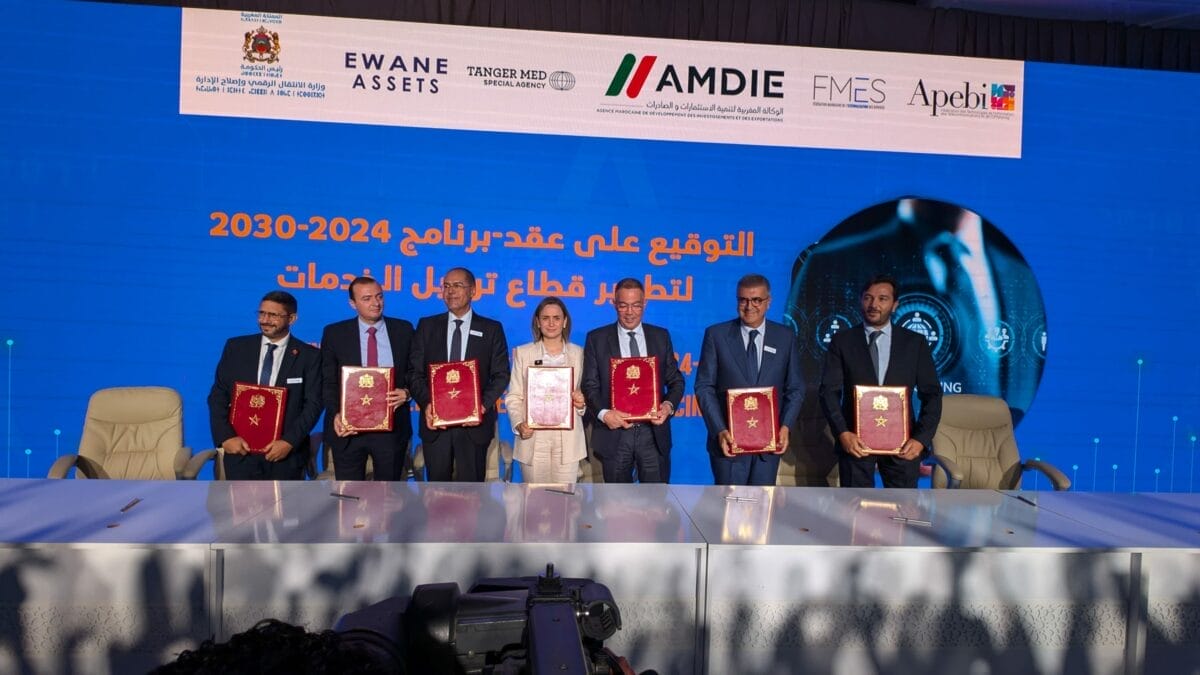

The Government of Morocco has officially launched the “Digital Morocco 2030” strategy, a five-year national plan aimed at accelerating digital transformation across key sectors of the economy, strengthening infrastructure, and expanding job opportunities in the digital ecosystem. According to mapnews, The initiative was formally unveiled at a state ceremony in Rabat on September 25, 2024, presided over by Prime Minister Aziz Akhannouch and senior government officials, signaling a coordinated commitment to positioning Morocco as a competitive digital hub on the African continent and globally.
ALSO READ: Tesla Establishes First African Subsidiary in Morocco, Signalling Continent-Wide Expansion
The strategy allocates 11 billion Moroccan dirhams (approximately €1 billion) for implementation between 2024 and 2026, with overarching goals to create 240,000 direct digital sector jobs and train 100,000 youth annually by 2030, a significant increase from 14,000 in 2022, according to the Ministry of Digital Transition.
As part of its economic targets, the government plans to increase digital service exports from 17.9 billion dirhams in 2023 to 40 billion dirhams by 2030, supported by the development of 3,000 startups and the mobilization of 7 billion dirhams in startup financing. The strategy includes support structures to scale at least one or two high-growth ventures into unicorn-status companies
Public sector digitalization is a key pillar of the plan, with over 600 government services already digitized. The initiative seeks to improve user satisfaction levels above 80%, cut processing times by 50%, and reduce administrative procedures by 40%, with the aim of placing Morocco among the top 50 countries on the UN E-Government Development Index by the end of the decade
ALSO READ: Royal Sahara: A Sojourn into Morocco’s Golden Dunes
Infrastructure investment forms a central component of the strategy. The government has outlined plans to achieve 70% 5G coverage, connect 5.6 million households with fiber-optic internet, and extend high-speed connectivity to 1,800 rural communities by 2026. Additionally, According to wearetech.Africa, more than 6,300 public institutions are scheduled to be integrated into high-speed broadband networks within two years.
To support the digital economy, Morocco is expanding its technology infrastructure, including the construction of a $16.6 billion hyperscale data center in Tangier backed by Lloyds Capital and the development of a research and development hub in Casablanca by Oracle. According to Time news, Plans are also underway to establish an AI innovation factory and launch regional digital training centers, including the Jazari Institutes, aimed at building early AI skills among young learners
The government is also partnering with global tech firms through recently signed memoranda of understanding at GITEX Africa 2025, focusing on infrastructure deployment, digital skills development, and modernization of traditional industries. Strategic emphasis is being placed on emerging technologies such as artificial intelligence, blockchain, and cloud services, with estimates projecting these sectors could contribute up to 10% of national GDP by 2030
Despite the ambition, several challenges persist. Industry observers have flagged concerns around the pace of rural infrastructure rollout, gaps in regulatory modernization, and the need for institutional reforms to accelerate digital procurement and innovation governance. Nevertheless, the “Digital Morocco 2030” framework represents one of the most comprehensive national digital agendas in Africa, blending infrastructure development with targeted human capital investment and export growth strategies.